
About AIR APAC
An independent standards and evidence institution in Asia Pacific.
AIR APAC publishes AIRS-J/1 and the AI Readiness Index. It measures organisations and places, and it teaches the people who work in them. Those two activities are kept apart by rules, not by promises.
The mandate
Measure organisations. Teach people. Keep them apart.
AIR APAC exists because AI produces answers faster than organisations can be accountable for them. The Index makes public signal inspectable. The Standard makes individual judgment inspectable. Programs transfer capability. None of these convert into each other.
The method is public. Capability work is sold. Never to anyone we are currently measuring.The standards programme
AIR APAC publishes the rubric, and its limits.
AIR APAC is the issuing body for AIRS-J/1, the Standard for Managerial Judgment in AI-Enabled Work: nine dimensions under four domains, scored against public behavioural anchors.
The standard is published as v1.0 and open to evidence-led revision. The certification programme is in development: no credential is issued, no instrument is approved, and the review board is an open call. The programme is funded from AIR APAC's research and advisory work and accepts no technology-vendor funding. Certification outcomes will never be contingent on purchase of any training product, and no assessor or partner may be compensated on candidate outcomes. Both are normative provisions of the standard, not preferences.
Independence
These rules cost us revenue.
That is how you can tell they are rules. AIR APAC measures organisations and places, and it teaches the people who work in them. Those two activities are kept apart by published rules, not by promises.
- No sale of training, diagnostics, or advisory inside an open measurement period. The rule follows the people, not who pays.
- The method is frozen and published before the period opens, then rebuilt from scratch for the next one. Buyers get no private access, no early access, and no influence.
- Results are published free to whoever is measured. Free material stays available during the period, because nothing is being sold.

Core principles
Three principles that defend the trust moat.
Neutrality, evidence, and regional context govern every assessment and recommendation AIR APAC issues.
Neutrality. The Center is vendor-agnostic.
AIR APAC does not sell software and does not accept commissions from technology vendors. The role is to act as a neutral arbiter of readiness. AIR APAC tells organisations whether they are ready to adopt, not what to buy.
Evidence. The Center leads with data.
Opinion is insufficient for strategic decisions. Through the AI Readiness Pulse, AIR APAC maintains a public-signal dataset on organisational maturity across APAC. Guidance is benchmarked against evidence, not theory.
Context. The Center is APAC-first.
Silicon Valley frameworks do not always translate to Southeast Asia, North Asia, or Oceania. AIR APAC works inside the specific cultural, regulatory, and institutional dynamics that define the region.
Engineering entity
Exeter Labs builds and contracts. AIR APAC is the public brand.
Exeter Labs is the legal and engineering entity behind AIR APAC. It holds contracts, IP, and the build capability. It is not a second public brand, a software vendor, or a commercial answer to the research. Counterparties who need to see who builds the work will find Exeter Labs named. Everyone else is asked to remember AIR APAC.
AIR APAC's vendor-neutral posture is unchanged. Readiness guidance never depends on buying Exeter Labs software. Visit exeterlabs.com.
Governance and councils
Standing councils, no vendor sponsorship.
AIR APAC's research and advisory work rests on a network of standing councils. Members provide methodological review, regional intelligence, and policy context. None of them carry vendor sponsorship.
Stewards the mandate, operating posture, and strategic direction of the Center.

Indhran Indhraseghar

Jooch Nam
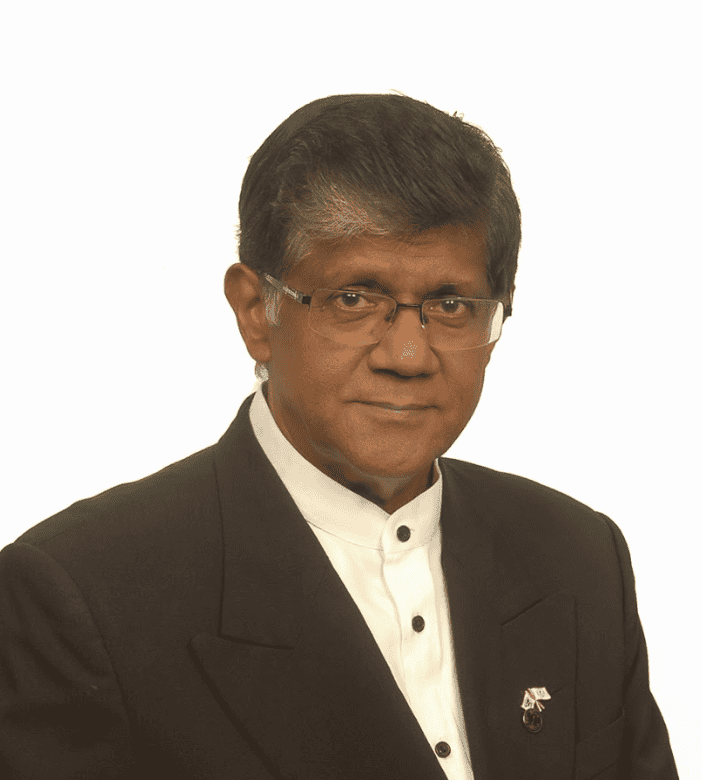
Dato J. Jegathesan

Julius Suharto

Nicholas Bardy

Subash Palaniappan

Martin Pusakas

Philippe Deltombe
Some members serve on more than one council by design, so that technical, academic, and operating perspectives stay connected across the Center's work. Council membership is reviewed periodically and updated on this page.
Experts
Subject-matter experts, mapped to the six readiness components.
Beyond the standing councils, AIR APAC draws on subject-matter experts from industry and academia, organised by the readiness component each one covers.
Leadership Readiness experts advise on strategic intent, executive alignment, and the operating decisions that determine whether AI adoption gets funded and sustained.

Edmund Ortega
AI Readiness ExpertJulius Suharto
AI Readiness Expert
Prof (Adj.) N.S. Soma
AI Readiness Expert
Glen Hopper
AI Readiness Expert
Yuying Chen-Wynn
AI Readiness ExpertSubash Palaniappan
AI Readiness ExpertExperts frequently cover more than one component; they are listed under every component their work touches.
Partners and collaborations
Independent work, supported by the region.
Featured research collaboration

Tourism Promotion Organization for Global Cities (TPO)
A research collaboration with a multilateral, member-based intergovernmental organisation for urban tourism across global cities. TPO is a UN Tourism affiliate member. The work applies AIR APAC's behavioural-signal methodology across three streams: the Urban Tourism AI Readiness Benchmark, Asymmetric Visibility in travel discovery, and AI governance and policy signals for tourism. The inaugural issue is forthcoming.
Organisations AIR APAC has collaborated with







Assess your readiness
See where your organisation stands.
Fifteen minutes. Thirty questions. Six components. Benchmarked against 1,000 APAC organisations.
Take the AI Readiness Scorecard