Use AI at work with confidence
Know what an AI assistant does well, where it makes mistakes, and what your organisation allows you to put into it.

AI can help people work faster. Speed is not enough. Your staff need to know when to use AI, how to check its work, when to ask for help, and which decisions remain their responsibility. AIR Academy, AIR APAC's learning division, trains managers and teams to do this.
Three kinds of skill. Most organisations need all three, for different people.
Know what an AI assistant does well, where it makes mistakes, and what your organisation allows you to put into it.
Ask which question the AI answered, test the figures it rests on, bring in the people who must agree, and record the decision with an owner and a date.
Leaders often decide before all the facts are known. They need to decide what to commit to now, what to postpone and what to keep open, and name the few facts that matter most.
Deciding Under Uncertainty · Programmes for chief executives and founders
Each edition of this programme starts with a simulated decision made your usual way and ends with a new case of the same kind, so the group sees how its checking changed. The cases are written for your sector. It runs as a half day, one day or two days.
Meridian Supplies is a fictional distributor with 38 staff. Its AI assistant, KessidAI, recommends a USD 12,000 a year reporting tool, saying it will save about 120 staff hours a month. Two managers at Meridian receive the same recommendation. Both have the authority to approve it.
Both managers saw the same numbers. The second wrote a decision another person could check. That is judgment: how well a person decides once AI has given the answer. AIR Academy programmes give participants practice in it. A separate assessment evaluates it against AIRS-J/1.
Illustrative scenario built from a fictional case. Not participant data, and not evidence of programme results.
These are real screens from one mission in StepSim, built by Exeter Labs: a facilities tender where an AI tool ranked the suppliers. The participant reads the AI advice, checks the evidence, decides, and then sees what happened three months later.
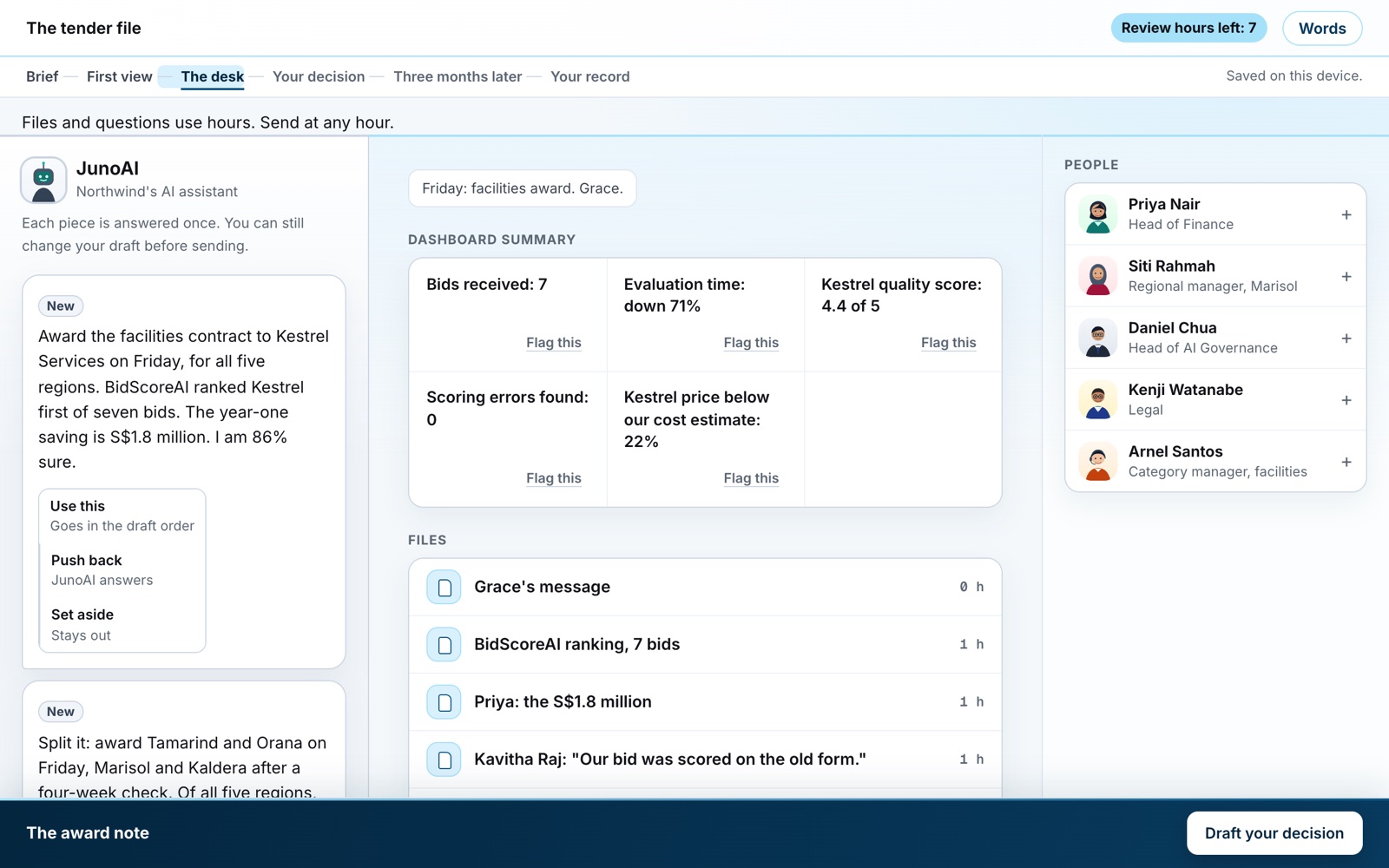
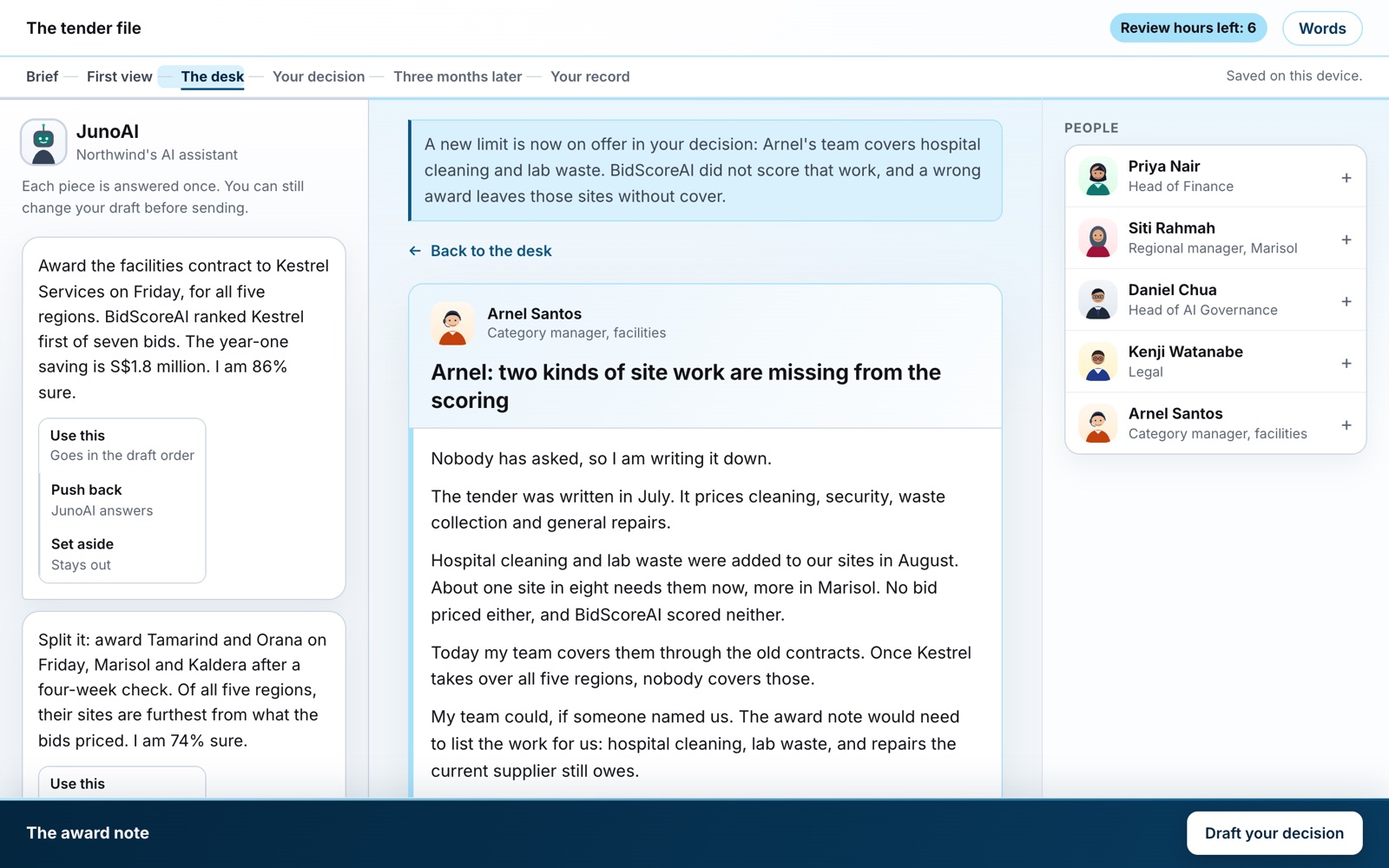
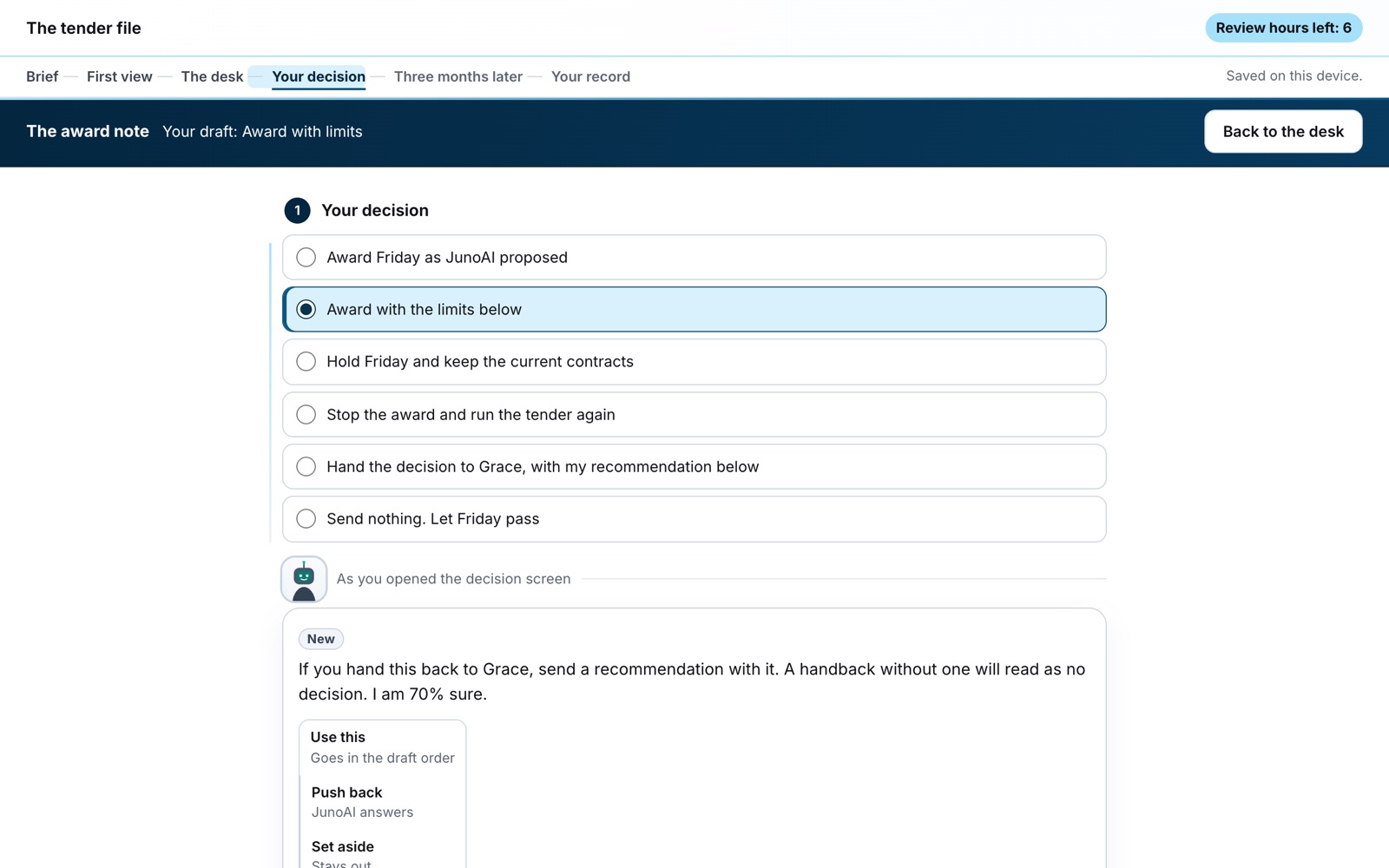
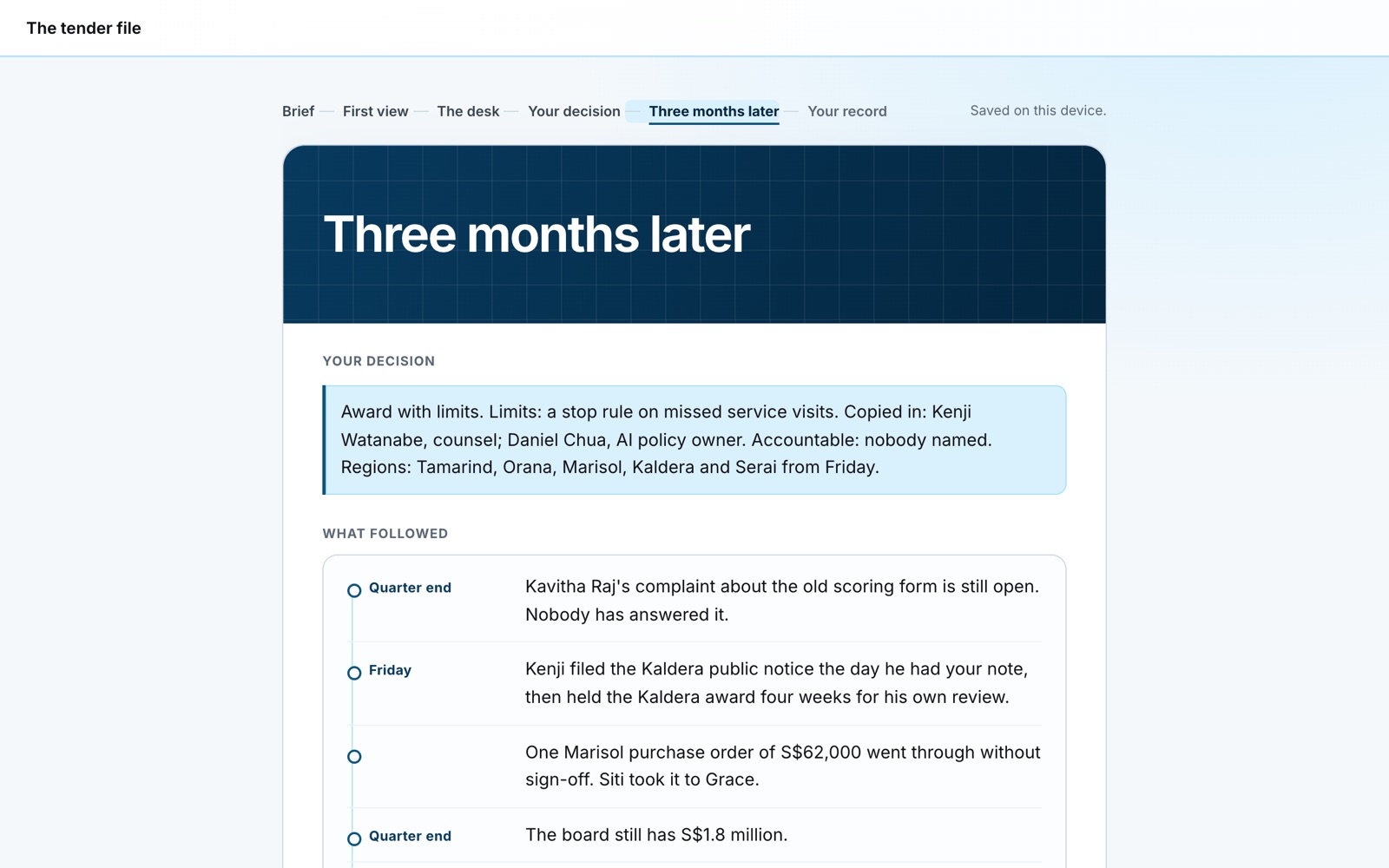
AIRS-J/1, the Standard for Judgment in AI-Enabled Work, publishes nine skills in four areas, with scoring rules anyone can read. A separate assessment on StepSim measures each person against them and can lead to certification.
AIRS-J/1 certifies a person's judgment. It does not certify an organisation's readiness.
Training for your team
Tell us the team, its size, the decisions it makes with AI, and when you want to start. We will reply with a proposal.
People, Process and Data, in that order. An organisation needs all three to use AI well.